Why Impact Films Fail: The Gap Between Good Intentions and Good Storytelling | Impact Film Production India

By The Qurious Studio
Every impact film begins with a good reason to exist. A programme that changed lives. A community that needs to be seen. A cause that deserves more attention than it currently gets. The intention is almost always sound.
And yet, most impact films fail to find an audience. They get made, screened once at an event or uploaded quietly to a website, and then they disappear. Few people who were not already invested in the cause ever watch them. Fewer still are moved enough to act.
This happens far too often in impact film production in India, and it rarely has anything to do with how much the organisation cares. It has to do with a gap that opens up between good intentions and good storytelling, and that gap is worth understanding closely.
Impact Is Not a Message. It's an Experience.
The most common mistake in impact filmmaking is treating impact as something you state rather than something you make someone feel. A film that lists outcomes, numbers of beneficiaries reached, percentage improvements, programmes delivered, is communicating information. It is not yet telling a story.
Audiences do not act on information alone. They act on feeling. A donor does not give because a statistic moved them; they give because a moment, a face, a single human truth moved them, and the statistic afterward gave that feeling a shape they could justify to themselves.
This is the central problem with most impact films. They are built to inform a funder rather than move a stranger, and in trying to satisfy the former, they often fail to reach the latter entirely.

Where Impact Films Usually Go Wrong
There are a few recurring patterns we see across NGO and CSR film production in India, regardless of cause, sector, or budget.
The film tries to cover the whole programme instead of one true moment within it.
Organisations often want their impact film to represent the full scope of their work. Every initiative, every region, every beneficiary group gets a mention. The result is a film that moves quickly across a great deal of ground and lands nowhere in particular. A single, specific story, one person, one moment of change, almost always carries more weight than an overview ever could.
The people at the centre of the story are treated as evidence, not as people.
This is the most uncomfortable pattern to name, and the most important one. When beneficiaries appear only to validate a programme's success, speaking in scripted gratitude or repeating organisational language, audiences sense it immediately, even if they cannot articulate why. Respectful storytelling means giving someone enough space and time to be a full person on screen, complicated, specific, real, rather than a proof point for a cause.
The film assumes the cause is enough to hold attention on its own.
A worthy cause does not automatically make a compelling film. Audiences today, across every platform, decide within seconds whether to keep watching, regardless of how important the underlying issue is. Importance and engagement are not the same thing, and impact storytelling has to earn attention through craft, not assume it through cause.
What Changes When You Design for the Viewer
The organisations that get the most from their impact films share one trait: they design the film around what a stranger, someone with no prior connection to the cause, would need to feel before they cared.
This is a difficult mental shift for many organisations, because internally, everyone already cares. The challenge of a documentary for nonprofits is building a bridge to someone who currently does not, and that bridge is built with specificity, not scale. A name. A face. A single ordinary detail that makes a stranger lean in, because it feels true rather than performed.
When a film is built this way, the impact still gets communicated. It just arrives through feeling first, and the data that follows lands on ground that has already been prepared.
A Different Way to Brief an Impact Film
If you are preparing to commission an NGO or CSR film, a useful starting question is this: who is the one person whose story, told fully and honestly, would make a stranger understand what this entire programme is actually for?
Once that person is identified, the structure of the film tends to follow. The programme becomes context rather than subject. The numbers become support rather than centrepiece. And the film becomes something people choose to watch and to share, rather than something they are asked to sit through out of obligation.
This is the shift that separates impact films that circulate from impact films that quietly disappear after a single screening.
Where We Start
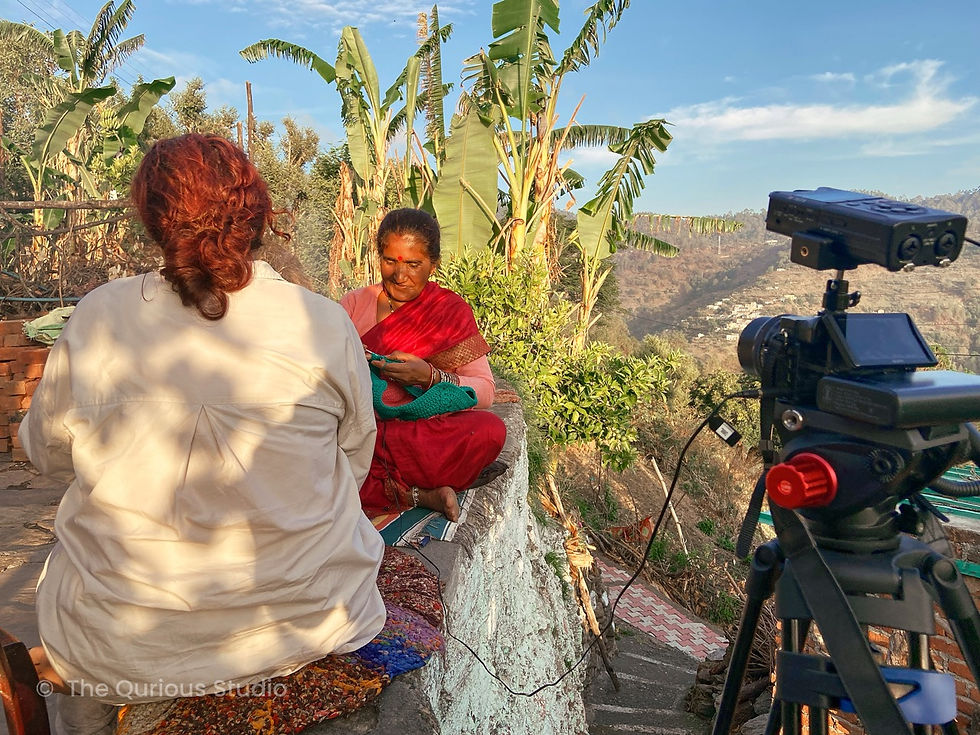
At Qurious, every impact film begins the same way every other project does for us: by spending real time with the people whose story is being told, before any camera is involved. We ask questions that have nothing to do with metrics. We listen for the detail that makes a life specific rather than representative.
That process takes longer than simply documenting a programme's activities. It is also, in our experience, the only reliable way to make a film that does justice to both the cause and the people living inside it.
Working on an impact film for your organisation? Let's talk about the story worth telling.


Comments