Documentary in India: Why the Most Powerful Stories Are Still Untold | Documentary Filmmaking India

By The Qurious Studio
India is one of the most documented and simultaneously most underrepresented countries on earth. The sheer scale of what happens here daily, across geographies, languages, communities, and contradictions, exceeds the capacity of any single storytelling tradition to contain it. And yet, when you look at the landscape of documentary filmmaking in India, you find the same territories being mapped again and again, while vast stretches of lived experience remain almost entirely invisible on screen.
This is not a complaint about the quality of Indian documentary. There is extraordinary work being made. It is an observation about what is being systematically left out, and why the gap between what exists and what is possible in documentary filmmaking here is still so large.
What Gets Made and What Gets Left Out
The documentaries that find the most visibility in India tend to cluster around a familiar set of subjects. Political narratives, often focused on the powerful or on protest. Environmental stories, usually framed around crisis. Portraits of artists, often already celebrated. Stories of injustice, frequently told through the lens of the outsider observing rather than the insider speaking.
These are not unworthy subjects. But they represent a fraction of the available territory. Between them lies an enormous middle ground: the ordinary extraordinary, the quietly significant, the deeply human stories that happen in places cameras rarely reach, among people who are rarely asked to speak directly to an audience.
The daily negotiation of dignity inside institutions. The texture of aspiration in a small town. The way a community holds its own contradictions. The relationship between a trade and the person who practises it for forty years. The interior life of work. The experience of change, not as crisis but as slow, unremarkable transformation.
Documentary filmmaking in India has barely scratched the surface of these territories, and the reasons for that are worth examining.

Why the Gap Exists
The reasons the most powerful stories go untold in documentary filmmaking are structural as much as they are creative.
Access is hard and trust is harder.
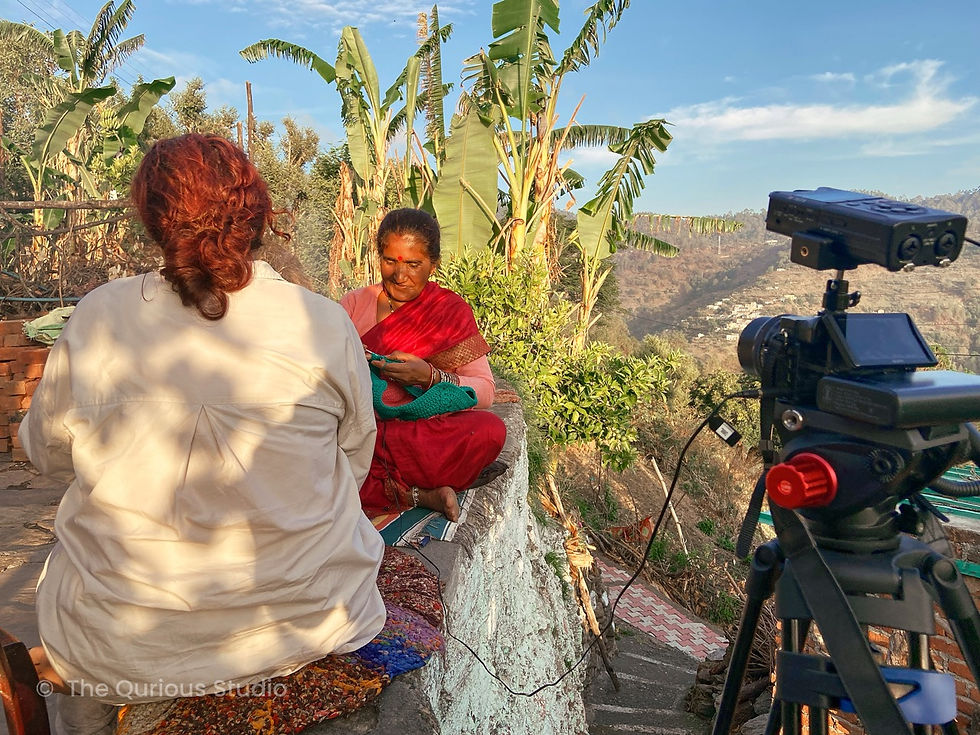
Getting into the places where the most interesting stories live takes time, relationships, and a kind of sustained presence that short-funded projects rarely allow for. Communities that have been photographed and filmed and studied and left behind have every reason to be sceptical of another camera arriving. The documentary filmmaker who earns genuine access does so over months, not days, and that investment is difficult to justify on a tight production timeline.
The commissioning culture rewards familiarity.
Most documentary commissions in India, from broadcasters, from NGOs, from institutional funders, tend to gravitate toward subjects that already have an established language. Stories that can be pitched quickly, that connect to known concerns, that fit an existing slot. The story that resists easy categorisation, that requires a different kind of attention to understand, struggles to find a commissioner willing to take the time to understand why it matters.
The distinction between documentation and storytelling is still being worked out.
A great deal of what is made in the name of documentary in India is closer to documentation: the recording of events, activities, or statements without the deeper shaping that transforms raw material into a film that moves an audience. This is not a failure of intent. It is often a failure of time, resource, and the kind of editorial support that allows a filmmaker to sit with footage long enough to discover what it is really about.
What a Different Approach Looks Like
Documentary filmmaking at its most powerful, in India as anywhere, begins not with a subject but with a question that the filmmaker genuinely does not know the answer to.
Not: how do I illustrate what I already believe about this community? But: what is actually happening here, and what would I need to stay long enough to understand it?
That shift in orientation produces fundamentally different work. It requires patience that the industry does not always reward and curiosity that must be protected against the pressure to produce. But it is the only approach, in our experience, that leads to the documentary that a stranger will watch all the way through and remember afterward.
The subjects are everywhere. A first-generation college student in a tier-three city navigating a family that has no vocabulary for what she is attempting. A craftsperson whose skill represents a form of knowledge that will not outlive them by more than a decade. A municipal worker whose daily route through a city reveals more about urban life than most urban documentaries manage to show. A retired civil servant reconstructing what forty years of institutional work actually meant.
These are not niche stories. They are stories about how most people in India actually live, and they are almost entirely absent from the documentary record.
The Opportunity for Organisations
For organisations working in India, whether in development, in business, in culture, or in community, this gap in the documentary record is not just a cultural observation. It is a practical opportunity.
The stories that exist inside most organisations, and in the communities they work with, are significantly more interesting and more powerful than the films that usually get made about them. The distance between what an organisation knows about its own work and what a documentary filmmaker with real access could reveal about it is, in our experience, consistently larger than clients expect.
Commissioning a documentary is not the same as commissioning a promotional film. It is an act of genuine inquiry, an agreement to look closely at something and let the camera go where the truth actually is, rather than where the brief assumed it would be. That requires a different kind of trust, and it produces a different kind of film.
What We Are Trying to Do
At The Qurious Studio, documentary filmmaking in India is not a sideline to our corporate and brand work. It is the instinct that shapes everything we make. The same curiosity that drives a documentary, the same willingness to wait for the real moment, to follow the story rather than illustrate a predetermined conclusion, is what we bring to every project regardless of format or budget.
We believe the most powerful stories in India are still out there, largely unfilmed. We are interested in being part of changing that, one project at a time.
Working on a documentary project or interested in bringing a documentary approach to your organisation’s story?
Let’s talk: thequriousstudio.com/contact


Comments